
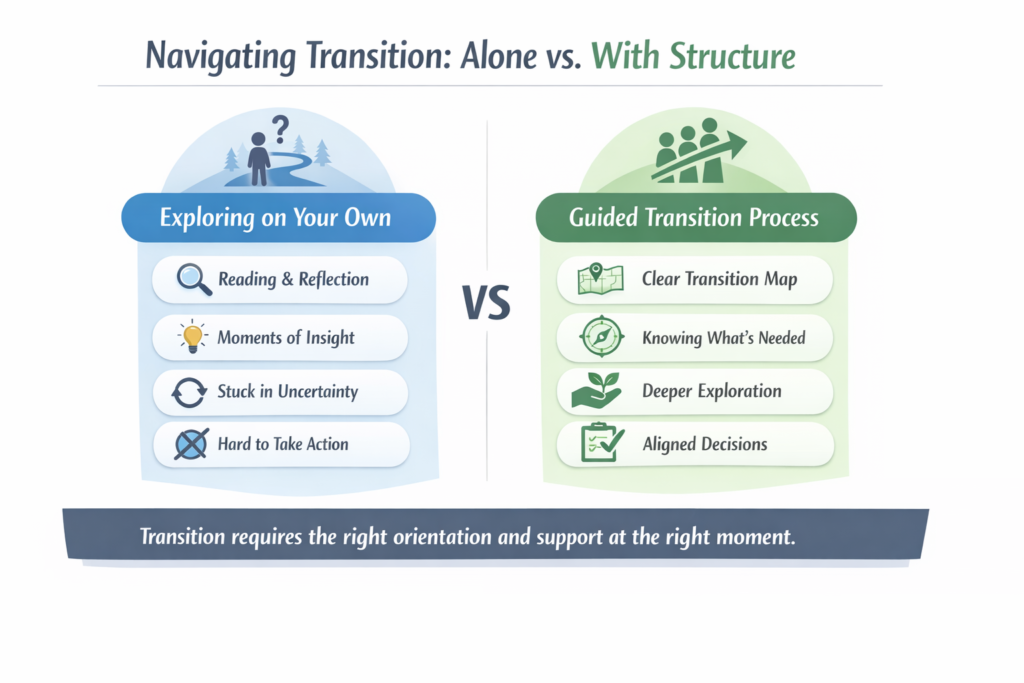
𝐖𝐡𝐲 𝐧𝐚𝐯𝐢𝐠𝐚𝐭𝐢𝐧𝐠 𝐭𝐫𝐚𝐧𝐬𝐢𝐭𝐢𝐨𝐧 𝐚𝐥𝐨𝐧𝐞 𝐨𝐟𝐭𝐞𝐧 𝐤𝐞𝐞𝐩𝐬 𝐩𝐞𝐨𝐩𝐥𝐞 𝐬𝐭𝐮𝐜𝐤?
transition insight
𝐓𝐫𝐚𝐧𝐬𝐢𝐭𝐢𝐨𝐧 𝐚𝐧𝐝 3 𝐥𝐞𝐯𝐞𝐥𝐬 𝐨𝐟 𝐑𝐞𝐚𝐥𝐢𝐭𝐲 (𝐀. 𝐌𝐞𝐧𝐝𝐞𝐥𝐥) – 𝒘𝒉𝒚 𝒎𝒐𝒔𝒕 𝒕𝒓𝒂𝒏𝒔𝒊𝒕𝒊𝒐𝒏𝒔 𝒂𝒓𝒆 𝒊𝒏𝒄𝒐𝒎𝒑𝒍𝒆𝒕𝒆?
𝐓𝐫𝐚𝐧𝐬𝐢𝐭𝐢𝐨𝐧 𝐚𝐧𝐝 3 𝐥𝐞𝐯𝐞𝐥𝐬 𝐨𝐟 𝐑𝐞𝐚𝐥𝐢𝐭𝐲 (𝐀. 𝐌𝐞𝐧𝐝𝐞𝐥𝐥) – 𝒘𝒉𝒚 𝒎𝒐𝒔𝒕 𝒕𝒓𝒂𝒏𝒔𝒊𝒕𝒊𝒐𝒏𝒔 𝒂𝒓𝒆 𝒊𝒏𝒄𝒐𝒎𝒑𝒍𝒆𝒕𝒆? People focus on what’s visible: career moves, relationship decisions, better habits…and

There is no shortage of tools for navigating difficult periods:
journaling, reflection, mindfulness, reading, coaching frameworks, podcasts…
All of them can help. And yet, many people who try them remain stuck.
Not because they are not doing the work —
𝒃𝒖𝒕 𝒃𝒆𝒄𝒂𝒖𝒔𝒆 𝒕𝒉𝒆𝒚 𝒂𝒓𝒆 𝒕𝒓𝒚𝒊𝒏𝒈 𝒕𝒐 𝒏𝒂𝒗𝒊𝒈𝒂𝒕𝒆 𝒂 𝒕𝒓𝒂𝒏𝒔𝒊𝒕𝒊𝒐𝒏 𝒘𝒊𝒕𝒉𝒐𝒖𝒕 𝒐𝒓𝒊𝒆𝒏𝒕𝒂𝒕𝒊𝒐𝒏.
Most approaches treat transition as something to explore. But transition is not only something to explore. 𝑰𝒕 𝒊𝒔 𝒂𝒍𝒔𝒐 𝒔𝒐𝒎𝒆𝒕𝒉𝒊𝒏𝒈 𝒕𝒐 𝒎𝒐𝒗𝒆 𝒕𝒉𝒓𝒐𝒖𝒈𝒉.
And movement requires clarity on one simple question:
Where am I in the process?
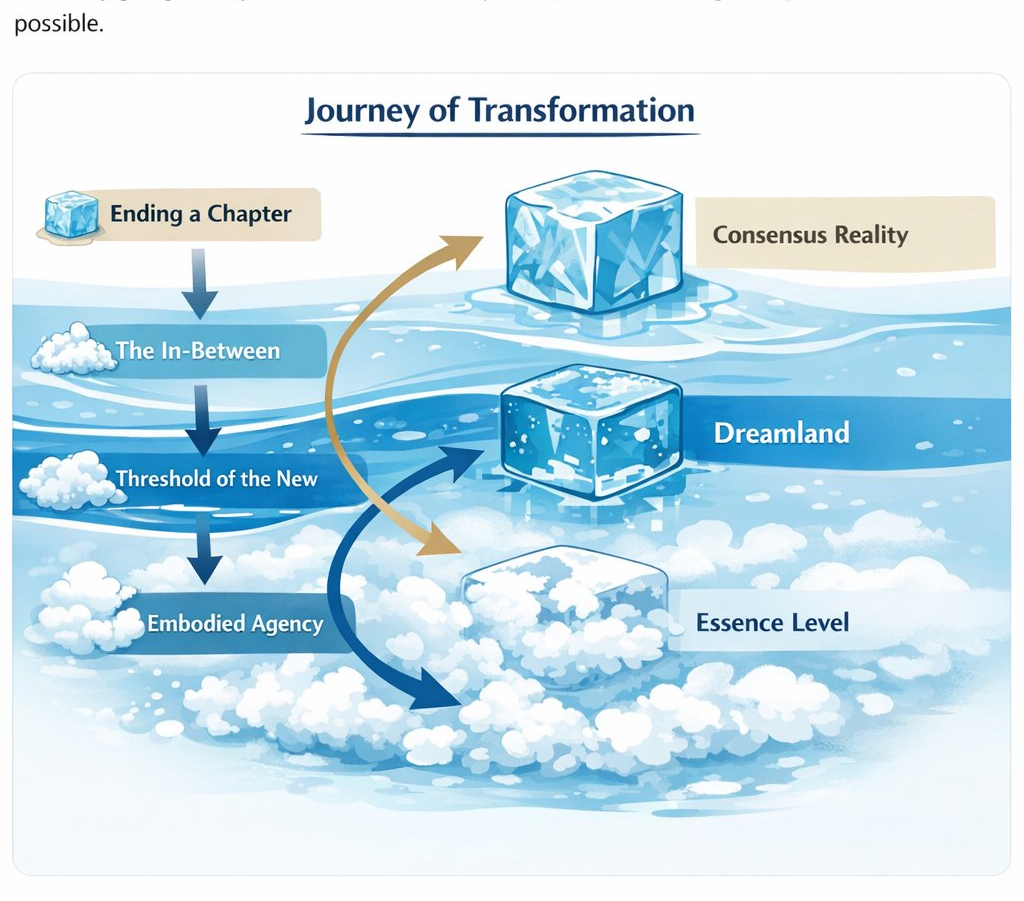
In my work, I see that most transitions follow a pattern:
ending a chapter
the in-between
the threshold of the new
embodied agency
Each phase comes with its own challenges — and its own demands.
The difficulty is not the transition itself.
The challenge is trying to:
– act when the phase asks for reflection
– decide when the phase asks for patience
– move forward when something still needs to end
Without that clarity, even the best tools can be misapplied.
With it, the same tools become far more effective.
If you find yourself in such a moment, the question may not be:
“What should I do next?”
But rather:
“What is this phase asking of me?”
More posts with this link